
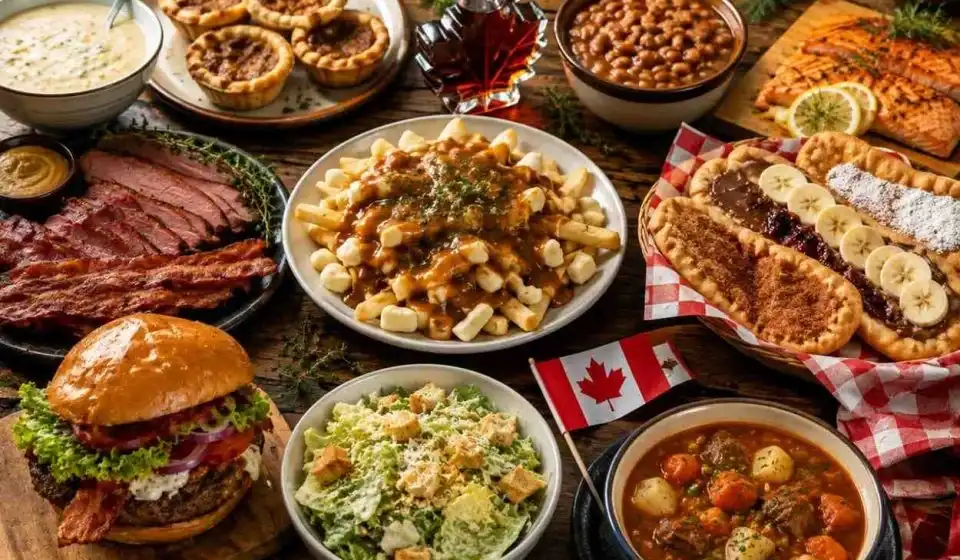

People around the world keep coming back to ask just one question: why is Canadian cuisine popular when it doesn’t fit neatly into one style, culture, or ingredient? The answer is actually right there in the question. It has its own flavour in how the ingredients are used in each dish.
Canada recorded over 2.05 million international travellers in 2024, and food is the centre of the joy they seek while travelling. Canadian cuisine draws people in because it brings together 2,500 years of Indigenous tradition, French-Canadian roots, and the honest influence of every culture that’s ever called this country home, all on the same plate.
Is Canadian Food Just Poutine and Maple Syrup?
Most people outside Canada think they know what Canadian food is. Poutine, yes. Tim Hortons, probably. Maple syrup on everything, sure. But that picture only covers a small corner of what actually ends up on Canadian tables.
Canadian food, at its core, began with Indigenous ingredients and techniques that early settlers adopted to survive and thrive in a harsh yet beautiful landscape. Foods like:
- Bannock- a dense, flat bread that sustained fur traders, early settlers, and Indigenous communities across every province. Most Indigenous nations in North America carry their own version of it.
- Pemmican- a high-energy mixture of dried meat and fat that served as one of the original trail foods before trail food was even a concept.
- Bison and moose- not novelty items, but primary protein sources that shaped the diet of entire northern communities for centuries. In Canada’s northern regions, moose appears as steaks, sausages, and even as a pizza topping.
- Métis stews- slow-cooked, barley-heavy dishes that reflect the mixed Indigenous and European heritage of the Métis people.
- Maple taffy- pulled straight from snow in late winter- is one of the oldest treats on Canadian soil.
These aren’t dishes someone invented for a menu. They came from the land, the season, and the need to feed people well in a country that doesn’t always make it easy.
What Makes Canadian Dairy and Sourcing Different?
Here’s something most people don’t realise: Canadian food tastes different from its American equivalent because Canada operates under a supply-managed dairy system.
The same principle applies across the Canadian kitchen:
- Local grain milled for Canadian flour carries different protein content and baking characteristics than American alternatives.
- Regional beef from Canadian farms tends toward less aggressive seasoning because the meat itself carries more flavour.
- Fresh produce sourced from Canadian farms within season doesn’t need the same preservative load that long-haul supply chains create south of the border.
Does Canadian Food Feel Like Home?
When you walk into a Canadian kitchen, you’ll find something different in the air. Not a single scent or a single style, but a layered kind of comfort that comes from a food culture built on inclusion rather than exclusivity.
A cuisine that doesn’t belong to one group; it belongs to everyone who’s ever cooked something here. That’s why Canadian cuisine is popular with travellers and newcomers alike: it meets people where they are. You find heat and spice sitting beside cream and butter, rice dishes next to rye bread, butter tarts beside gulab jamun at a community potluck, and neither one feels out of place.
At The Canadian Eatery, this is exactly what we cook toward. Not fusion for the sake of novelty, but food that reflects the actual texture of Canadian life, the part that happens at the table, where everybody gets a seat.
Does Canadian Food Have a National Identity Worth Celebrating?
Canada doesn’t shout about its food the way France, Italy, or Japan does. The dishes speak clearly enough on their own.
What Canadian food gets right, consistently, is the relationship between ingredient and technique. It respects what the land produces and finds the most honest way to cook it. That approach:
- Keeps food seasonal. Canadians have always eaten what the current month provides, from wild berries in summer to root vegetables through winter.
- The preservation, smoking, curing, pickling, and drying of foods are built into Canadian food culture as practical responses to long winters, not trends.
- Centre the table. Canadian meals are built around gathering. The portions are generous, the seconds are expected, and the conversation runs long.
Conclusion
The reason why people love Canadian food isn’t complicated. It tastes good because it comes from rarely picked ingredients. It feels familiar because it carries the traces of almost every culture that’s ever called Canada home.
That’s why Canadian cuisine is popular far beyond Canadian borders, and why it keeps pulling people back to the table long after the meal is done.
FAQs
Q1. What makes Canadian food different from American food?
Ans: Canadian food follows stricter ingredient standards, especially in dairy. Fresh cheese curds, locally sourced beef, and seasonal produce give Canadian dishes a flavour that processed alternatives can’t give.
Q2. Is Canadian cuisine only about poutine and maple syrup?
Ans: No, not even close. Poutine and maple syrup are well-known dishes. Still, Canadian food runs much deeper: bannock, tourtière, butter tarts, Métis stews, smoked salmon, and a whole range of dishes shaped by Indigenous traditions and immigrant communities across every province.
Q3. Why is Canadian cuisine popular with international travellers?
Ans: Because it feels familiar without being predictable, Canadian food carries influences from dozens of cultures, so no matter where you’re from, something on a Canadian table connects with you. It’s inclusive by nature, not by design.
Q4. Is Canadian food good for everyday eating or just special occasions?
Ans: Both. Canadian food culture is built around the everyday table, generous portions, simple techniques, and ingredients that don’t need much done to them to taste good. The same cuisine that shows up at a community potluck works just as well at a sit-down dinner.
Q5. What is the most iconic Canadian dish?
Ans: Poutine holds the title for most recognised, but ask a Canadian, and you’ll get a different answer depending on which province they’re from. Québec says tourtière. The Maritimes say lobster rolls. The Prairies say perogies. That disagreement is actually the most Canadian thing about the whole conversation.